
If you’ve ever lived in or toured a mid-century house, you’ve likely wondered what makes up interior plaster walls in 1950s homes. These walls aren’t just old construction. They’re a blend of craftsmanship, chemistry, and post-war innovation shaped for durability and comfort. In the era of rapid suburban growth, builders relied on strong systems found in 1950s plaster wall construction and classic plaster and lath walls to support growing families. Today, these structures still define many interior wall materials in old homes and influence modern mid-century home renovation decisions. Understanding their makeup helps you maintain, restore, or responsibly upgrade these historic interiors without sacrificing charm or long-term value.
What Makes Up Interior Plaster Walls in 1950s Homes
Many people think all old walls are the same. They aren’t. In reality, what makes up interior plaster walls in 1950s homes reflects shifting mid-century construction methods after World War II. Builders needed faster systems but still wanted strength, temperature stability, and elegance for growing suburban families.
These walls mixed traditional craftsmanship with early industrial materials. This shift shaped modern housing forever. They remain a vital part of historical building materials and the backbone of many interior wall materials in old homes still standing today.
Why 1950s Plaster Construction Was Unique
Unlike earlier eras, the 1950s relied on hybrid building. Builders mixed hand skills with factory materials. This transitional style connects directly to the 1950s home interior structure seen across suburban America today.
Materials Used in Interior Plaster Walls
The heart of these walls lies in their ingredients. Many used lime-based plaster blended with gypsum plaster walls, sand, and water. This blend created strong but breathable walls that managed indoor humidity better than modern panels.
In 1950s plaster wall construction, these materials provided long-term durability. They also helped shape vintage home wall materials still admired today for their texture and acoustic qualities.
Lime, Gypsum and Aggregates Explained
Builders chose lime for flexibility. They used gypsum for faster curing. Sand added structure. This material mix allowed better performance than many modern wall systems.
Lath Systems in 1950s Plaster Walls
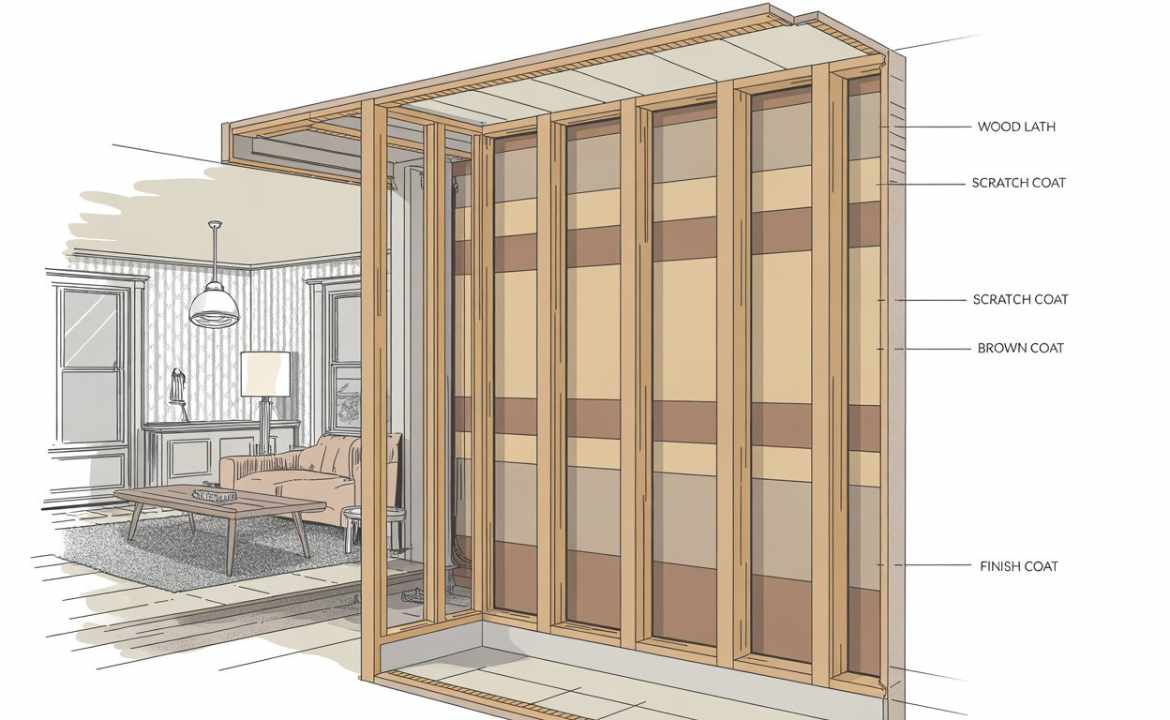
Behind the plaster sat lath, a hidden skeleton. Most homes used wooden lath, metal lath, or rock lath / gypsum lath. These systems supported heavy wet plaster during application.
This setup defined classic plaster and lath walls found in post-war housing. It also influenced today’s debate on plasterboard vs lath and plaster in restoration projects.
Wood, Metal, and Gypsum Lath Differences
Wood provided flexibility. Metal improved fire control. Gypsum lath sped installation. Builders chose based on budget, speed, and climate demands.
Layer Structure of 1950s Plaster Walls
Most homes used the three-coat plaster system, which included the scratch coat, brown coat, and finish coat. Each layer served a structural and aesthetic role.
This design enhanced structural integrity of Interior plaster walls while providing better resistance than thin modern systems. That’s a big reason these walls still outperform drywall in older homes.

Why Layering Increased Wall Strength
Layering controlled moisture, reinforced bonding, and improved impact resistance. It’s a construction method still admired worldwide.
Plaster Walls vs Modern Drywall
When comparing Interior plaster walls vs drywall, the differences feel dramatic. Plaster offers better acoustic control and stronger surfaces. Drywall favors speed and low cost. Both serve different housing eras.
In many U.S. homes, plaster defined quality while drywall defined efficiency. This contrast matters highly in mid-century home renovation and rental upgrades.
Why Drywall Replaced Plaster
Drywall reduced labor costs. It installed faster. Developers favored speed over longevity during housing booms.
Strength and Durability Over Decades
One reason people study what makes up interior plaster walls in 1950s homes is durability. These walls resist dents, improve indoor climate control, and block noise more effectively.
They also offer better soundproofing qualities of plaster and natural strength, unlike fragile panel alternatives. Many still stand strong after seventy years.
Why These Walls Aged Well
Dense materials and layered application reduced early wear and delayed major structural flaws.
Common Problems in 1950s Plaster Walls
Even strong walls age. Over time, plaster wall degradation occurs through building movement and moisture damage in plaster. Cracks, bulges, and detachment from lath may appear.
Owners often face plaster wall cracks repair challenges during old house renovation tips planning, especially in high-humidity environments or poorly ventilated homes.
Why Damage Happens Over Time
Seasonal expansion, vibration, and water intrusion slowly weaken plaster bonds with lath systems.
How to Identify Plaster Walls in Your Home
If you’re unsure whether your home contains these walls, check the thickness and firmness. True plaster feels denser and sounds solid when tapped.
Identifying what makes up interior plaster walls in 1950s homes helps guide safe plaster wall maintenance, especially when remodeling rentals or multi-family units.
Simple Identification Techniques
Look behind outlets. Thick edges and visible lath usually confirm old plaster construction.
Safety and Renovation for Rental Homes
Renovating these walls requires caution due to lead paint risks and possible asbestos in old wall materials. Landlords must ensure compliance with safety laws.
These factors directly affect replacing Interior plaster walls in rental homes and shape long-term rental property wall upgrades planning for safety and value.
Why Safety Testing Is Essential
Disturbing old plaster may release harmful dust. Testing protects tenants and property owners alike.
Preserve or Replace 1950s Plaster Walls
Should you preserve or remove them? Preservation supports historic home restoration and improves property value. Replacement simplifies wiring and insulation upgrades.
For many property owners, keeping them improves plaster wall insulation properties and saves money long term if maintained properly rather than removed completely.
Cost vs Long-Term Value
Removing plaster costs more initially. Preserving often saves budget and keeps authentic mid-century charm.
Information Table: Plaster vs Drywall Comparison
| Feature | 1950s Interior Plaster Walls | Modern Drywall |
| Durability | Very High | Moderate |
| Noise Control | Excellent | Fair |
| Fire Resistance | Strong | Limited |
| Lifespan | 70+ Years | 25–40 Years |
| Repair Complexity | Higher | Lower |
Case Insight
A rental property in Ohio retained original plaster during renovation. Owner invested in sealing cracks instead of replacing walls. Result was higher tenant satisfaction, quieter rooms, and increased resale value within five years.
Final Thought
Understanding what makes up interior plaster walls in 1950s homes gives you power. Whether you’re renovating, investing, or restoring, these walls aren’t obstacles. They’re structural stories waiting to be preserved or intelligently upgraded.
